Introduction to Legal Basement Suites in Calgary
A secondary suite, often referred to as a legal basement suite, is a self-contained residence located within a primary home—most commonly in the basement or as an attached addition. Backyard suites and garden suites are other types of self-contained, detached living spaces, such as garage suites and laneway homes. In Calgary, a property can only have one secondary suite, either a basement or a backyard suite, but not both. A legal suite must meet strict safety and building code standards to ensure it functions as an independent living space. This includes having its own entrance, proper egress windows for emergency escape, separate cooking facilities, and sanitary facilities such as a bathroom and kitchen.
A legal basement suite is defined as a self-contained living unit attached to a single-family home meeting all the local zoning laws and building codes. Calgary homeowners must comply with provincial rules and obtain all necessary permits to achieve suite legal status.
Legal status is crucial: only suites that comply with all city requirements and are registered with Calgary’s secondary suite registry are recognized as legal basement suites. It is important to consult Calgary’s secondary suite registry to verify whether a suite is legal, and once completed and inspected, the suite must be registered. Legalizing an existing basement, existing basement suite, or existing secondary suite requires obtaining the necessary permits and ensuring full compliance with current codes. A smoke-tight, fire-resistant separation between the suite and the main residence is mandatory, typically achieved with 12.7 mm drywall. Interconnected, hardwired smoke and carbon monoxide detectors must be installed in both the main dwelling and the suite, and smoke alarms and carbon monoxide detectors must be installed in each suite and correctly connected so that when one alarm is activated, the other alarms also sound. All suites must have a separate entrance accessible from outside without passing through the main residence. Each bedroom in a secondary suite must have at least one window that can be opened from the inside without the use of keys, tools, or special knowledge, and each suite must have at least one safe exit (only exit) leading directly outside. This not only protects homeowners from fines and insurance issues but also allows them to generate rental income and boost their property value. Whether you’re considering adding a new suite or verifying an existing suite, understanding these requirements is the first step to creating a safe, comfortable, and valuable suite in Calgary.
What is a Secondary Suite?
A secondary suite is a self-contained residence located within a primary dwelling, designed to function as an independent living space. Typically, a secondary suite includes two or more rooms—such as a kitchen, living area, sleeping quarters, and sanitary facilities—making it suitable for long-term occupancy. Essential features of a secondary suite include a private entrance, separate cooking facilities, and at least one window in each bedroom to provide natural light and emergency egress.
Secondary suites can be found in various parts of a home, including the basement, main floor, or upper floor. In Calgary, these suites are sometimes called legal basement suites or in-law suites, depending on their location and compliance status. To ensure safety and comfort for occupants, all secondary suites must meet the requirements set out in the National Building Code and the Alberta Fire Code. This includes proper construction standards for walls, floors, and ceilings, as well as adequate fire separation and ventilation. By meeting these standards, a suite can be recognized as a legal basement or secondary suite, providing peace of mind for both homeowners and tenants while also opening the door to transformative basement renovation ideas that maximize functionality.
Common Reasons Existing Basement Suites Fail Inspection
Many homeowners assume that if a basement already contains a kitchen and bathroom, it must be a legal suite. In reality, we often find suites that were built years ago under older requirements or completed without permits.
Some of the most common inspection issues include non-compliant bedroom windows, missing smoke-tight separations, improper fire-rated doors, inadequate ventilation, insufficient ceiling heights, missing interconnected smoke alarms, and HVAC systems that do not meet current code requirements.
Another common issue is work completed by multiple contractors over many years. One area may meet code while another does not. Before investing in finishes, it is important to understand exactly where the suite stands from a compliance perspective.
What We Usually Discover After Opening Basement Walls
One of the biggest surprises during legal basement suite projects is what is hidden behind finished walls and ceilings.
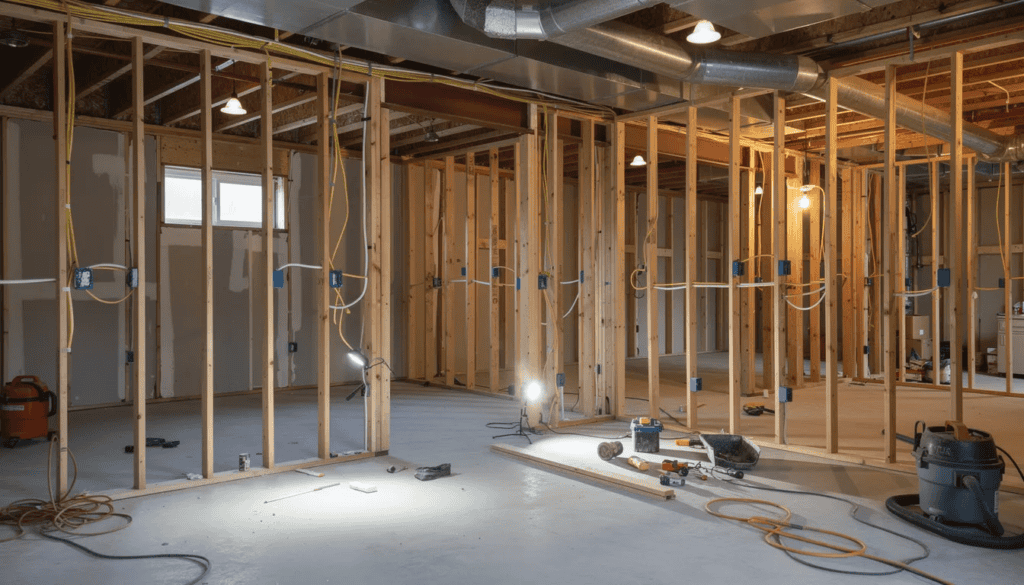
We frequently discover older wiring, improperly supported ductwork, plumbing modifications that were never permitted, missing insulation, damaged vapour barriers, and framing that does not align with current building standards.
In some homes, previous renovations focused on appearance rather than compliance. The basement may look finished, but once walls are opened, several upgrades become necessary before the suite can pass inspections.
This is why permit review and proper planning are so important before budgeting a basement suite project.
Why Egress Windows Cost More Than Homeowners Expect
Many homeowners assume that replacing a basement window is a simple upgrade. However, legal egress windows often require significantly more work than a standard window replacement.
In Calgary and Alberta, bedroom egress windows must provide a minimum unobstructed opening of 0.35 square metres (3.77 square feet), with no dimension smaller than 380 mm (15 inches). Window wells must also provide at least 760 mm (30 inches) of clearance.
The cost often comes from cutting concrete foundation walls, enlarging openings, installing engineered lintels where required, modifying grading, replacing window wells, and completing exterior finishing work.
While these upgrades can increase project costs, they also improve safety, natural light, ventilation, and property value.
The Biggest Mistakes We See During Legal Basement Conversions
The most expensive basement suite mistakes usually happen before construction begins.
Many homeowners underestimate permit timelines, ceiling height restrictions, HVAC requirements, or egress window costs. Others finalize layouts before confirming whether the existing structure can support their plans.
We also see homeowners invest heavily in flooring, kitchens, and paint before addressing ventilation, fire separation, or electrical requirements. Unfortunately, beautiful finishes do not help if the suite cannot pass inspection.
A legal suite should be designed around code compliance first and finishes second.
How Much Ceiling Height Do You Need For A Legal Basement Suite?
Ceiling height is one of the most important factors when evaluating a potential legal suite.
For many basement suites, a minimum ceiling height of approximately 1.95 metres (6 feet 5 inches) is required over living areas and paths of travel. Beams and ducts may be permitted lower in certain locations, but the overall layout must still provide adequate headroom and safe movement throughout the suite.
Homes with limited basement height may require creative planning, bulkhead redesign, duct relocation, or in some cases floor lowering to create a compliant living space.
Can Existing HVAC Systems Support A Legal Basement Suite?
HVAC is often one of the most overlooked parts of basement suite planning.
We frequently see basements where ductwork was installed with little consideration for future development. Large trunk lines and poorly planned bulkheads can consume valuable ceiling height and make rooms feel smaller than necessary.
An experienced HVAC contractor can often redesign duct runs, improve routing, and reduce the visual impact of bulkheads while still maintaining proper airflow.
For legal suites, heating systems must also meet code requirements for separation, ventilation, smoke control, and occupant comfort. Depending on the layout, homeowners may consider separate systems, supplemental heating, or other approved solutions.
When Floor Lowering Becomes Necessary
Some Calgary homes simply do not have enough ceiling height to create a comfortable legal basement suite.
When ceiling height cannot be achieved through HVAC redesign, structural adjustments, or layout changes, floor lowering may become an option.
This process involves excavating below the existing slab and rebuilding the basement floor at a lower elevation. While it can be a significant investment, it may allow an otherwise unusable basement to become a legal, comfortable, and highly valuable rental suite.
Floor lowering should always be evaluated by qualified professionals because it affects foundations, structure, drainage, plumbing, and overall project costs.
Why HVAC Design Matters More Than Most Homeowners Realize
One of the biggest differences between an average basement suite and a professionally designed basement suite is how mechanical systems are planned.
In many basements, ductwork was originally installed with unfinished spaces in mind. Once bedrooms, kitchens, and living areas are introduced, those same ducts often create large bulkheads that reduce ceiling height and limit furniture placement.
The best HVAC designs consider future basement development from the beginning. Thoughtful duct routing, properly sized equipment, and strategic bulkhead placement can make the basement feel significantly larger while preserving valuable headroom.
A legal suite is not only about meeting code requirements. It is also about creating a space that feels comfortable, functional, and attractive to future tenants.
Basement Suite Design Considerations
Designing a basement suite in Calgary involves careful planning to ensure the space is both functional and compliant with local regulations. One of the most important aspects is the inclusion of proper egress windows in each bedroom, which serve as emergency exits and are required for a legal basement suite. The suite must also feature a separate bathroom and dedicated cooking facilities, ensuring it operates as a fully independent living space.
A private entrance is another key requirement, which can be achieved through a separate exterior door or a shared stairwell that maintains privacy between the suite and the main residence. Before starting construction, homeowners must obtain a building permit and ensure their plans align with Calgary’s zoning and land-use bylaws. Additional design considerations include installing an adequate ventilation system, ensuring a reliable hot water supply, and verifying that the electrical panel has enough capacity to support the additional living space. By addressing these factors, homeowners can create a safe, comfortable, and code-compliant basement suite that adds value and versatility to their property, especially when working with experienced basement development and renovation specialists in Calgary.
Costs, Timelines, Building Permit & Financial Considerations
Costs and timelines for legalizing or building a legal basement suite vary significantly based on suite size, existing conditions, and how far your current basement is from code compliance. The costs associated with basement development include building permits, construction expenses, and the need for a plumbing permit when modifying or extending plumbing systems. Building a legal basement suite in Calgary requires several permits, which can incur significant costs.
For a typical 600 to 900 square foot legal basement suite renovation in Calgary (2026 dollars), expect costs in the mid-five-figure to low-six-figure range in CAD, in line with recent basement remodeling trends and cost expectations in Calgary. Exact figures depend on specific conditions.
Primary cost drivers include:
Structural changes (windows, doors, floor lowering) – High impact
Mechanical upgrades (HVAC, ventilation) – High impact
Permits and professional fees – Moderate impact
Finishes quality (basic vs. high-end) – Variable impact
Acoustic and lighting enhancements – Moderate impact
Permit review for secondary suites in Calgary generally takes 10 to 12 weeks. Total project timelines from approval to completion often run 10 to 16 weeks depending on scope. Submitting a detailed site plan is an important part of the permit application process to ensure compliance and smooth approval.
Financial incentives may be available. The City of Calgary offers a Secondary Suite Incentive Program of up to $10,000 to help homeowners with legalization costs. Check current eligibility with the city or your contractor.
Legal suites can significantly offset mortgage costs and support multi-generational living. A suite generating rental income can often recoup renovation costs within 5 to 10 years. Additionally, a registered legal suite increases property value and makes your home more attractive to buyers seeking income potential or flexible living arrangements. Legalizing a basement suite can also attract more responsible and long-term potential tenants, and helps address the shortage of affordable housing in Calgary.
Secondary Suite Planning Timeline, Permit Expiry & Extensions
The Development Permit is the first permit required in the process of legalizing a basement suite in Calgary, and homeowners must obtain a Development Permit before building a new basement or renovating an existing one. A building permit is also required to convert an existing basement into a legal secondary suite, and homeowners must complete a building permit application before starting any work. If an existing basement suite has a bathroom and kitchen, a Secondary Suite permit must be applied for, even if there is no intention to rent the unit.
Calgary approvals for a typical legal secondary suite take roughly 10 to 12 weeks from complete application to planning approval, depending on complexity and the city’s workload. Permits can be approved in as little as 30 days, but the process may take up to 90 days for larger projects. Development permits, if required, may extend this timeline.
Permits generally expire if work doesn’t start or inspections aren’t requested within a set period, typically around 180 days. Legal suite permits usually come with a fixed expiry date, and if modifications are made after the original permits were pulled, the suite must still comply with current regulations to maintain its legality. Homeowners can request permit extensions, but extensions aren’t granted indefinitely.
The construction of a legal basement suite in Calgary requires two types of inspections: one for framing before drywall and insulation, and a final inspection when the suite is ready for tenants. This final inspection confirms the suite is ready for occupancy and meets all compliance requirements. Additionally, an electrical permit is required for any new wiring or alterations to the electrical system in a basement renovation.
To avoid gaps and potential re-inspection fees:
Align financing approval with permit timelines
Book your licensed contractor before permits arrive
Confirm material lead times for specialty items
Factor in inspection scheduling windows
Space Reno creates project schedules that account for permit review, inspection windows, and realistic construction durations to keep projects on track, drawing on their broader expertise in modern home and basement renovations in Calgary.
Never start major work before permits are in place. This leads to stop-work orders, expensive re-work, and failed inspections that delay your project further.
City of Calgary Resources
The City of Calgary offers a range of resources to help homeowners navigate the process of developing or legalizing a secondary suite. One of the most valuable tools is Calgary’s Secondary Suite Registry, which allows you to verify the legal status of an existing suite and ensure it meets all current requirements. The city’s website provides comprehensive information on the building permit, development permit, and electrical permit processes needed for basement suite development.
For those new to suite development, the City of Calgary’s planning and development department offers guidance on zoning, land-use regulations, and the steps required to bring a suite into compliance. Homeowners can also access additional resources such as workshops, seminars, and online guides that cover every aspect of suite development. If you’re unsure whether your property is suitable for a basement suite, you can request a thorough investigation from the city to assess feasibility and compliance. These resources are designed to support homeowners at every stage, making it easier to create a safe, legal, and valuable suite in Calgary.